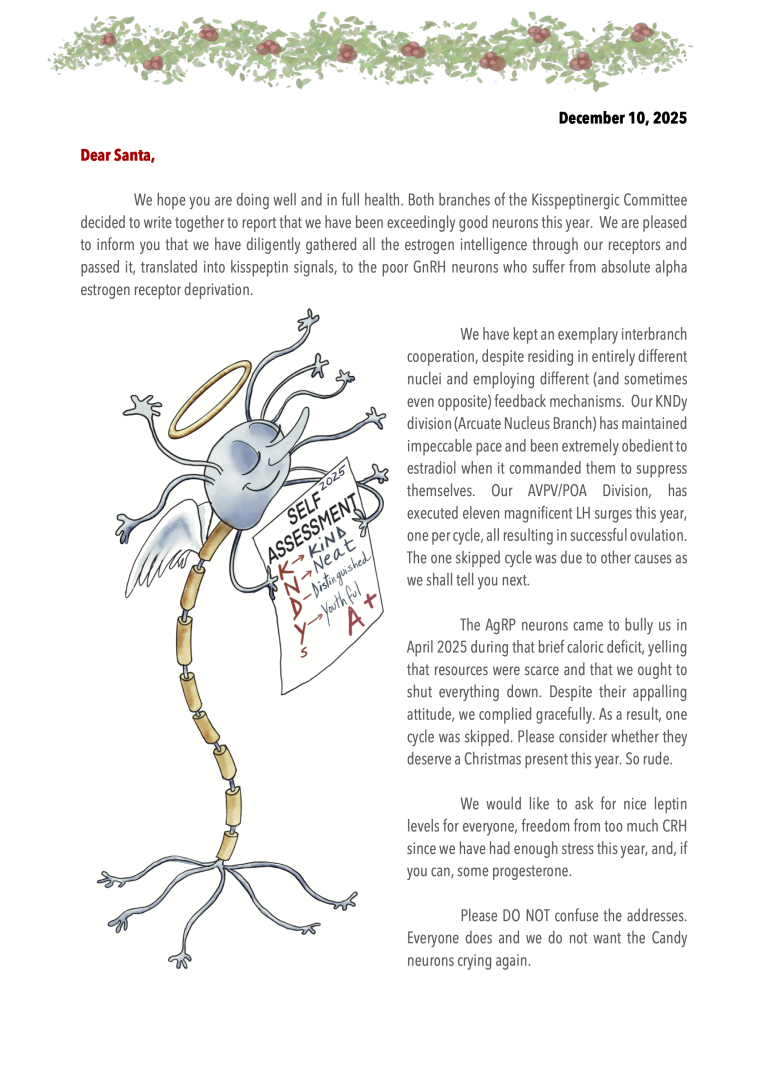
This illustrated Christmas Science blog presents a creative and educational look at key neuroendocrine concepts through a festive letter format.
By Virginia de la Lastra
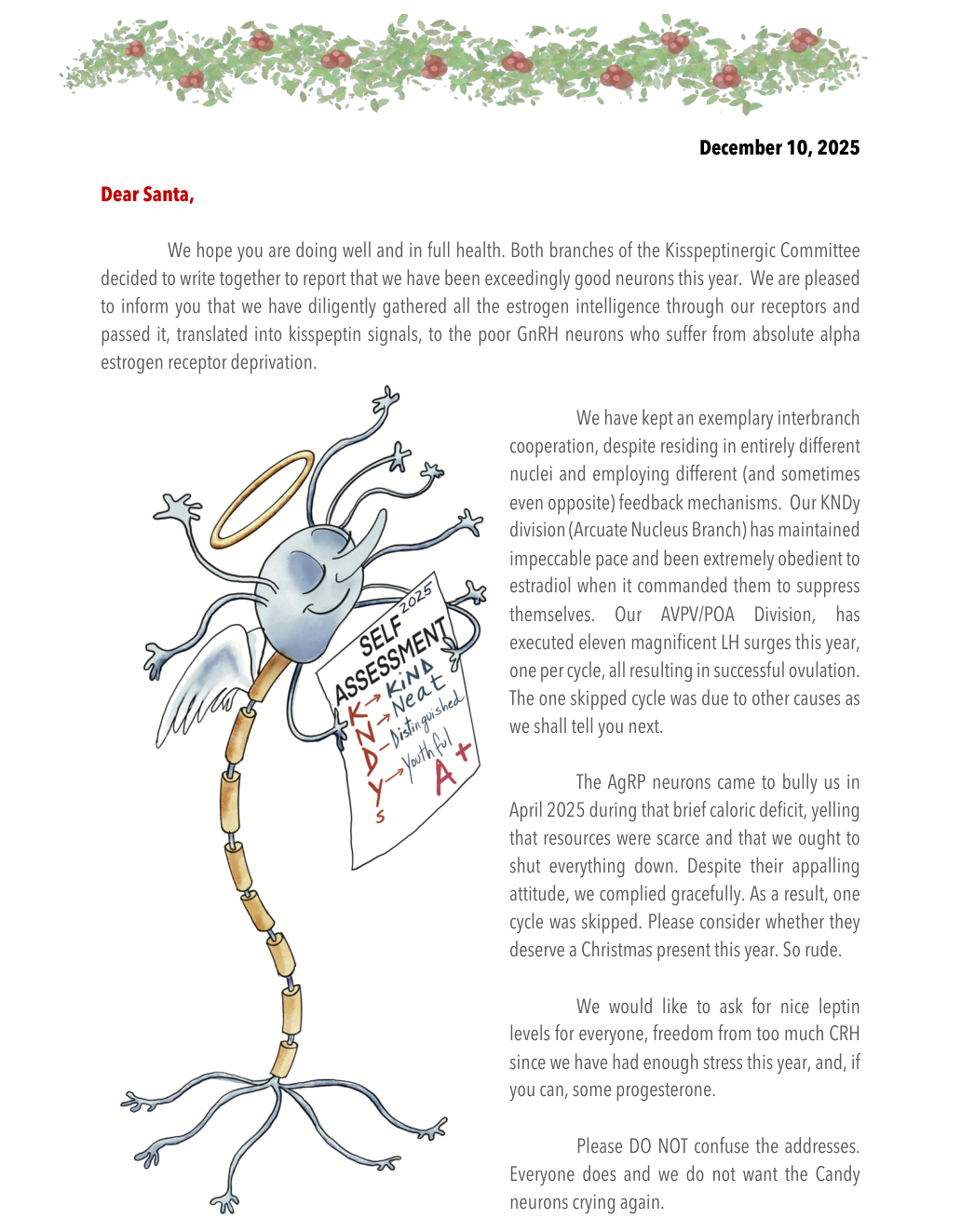
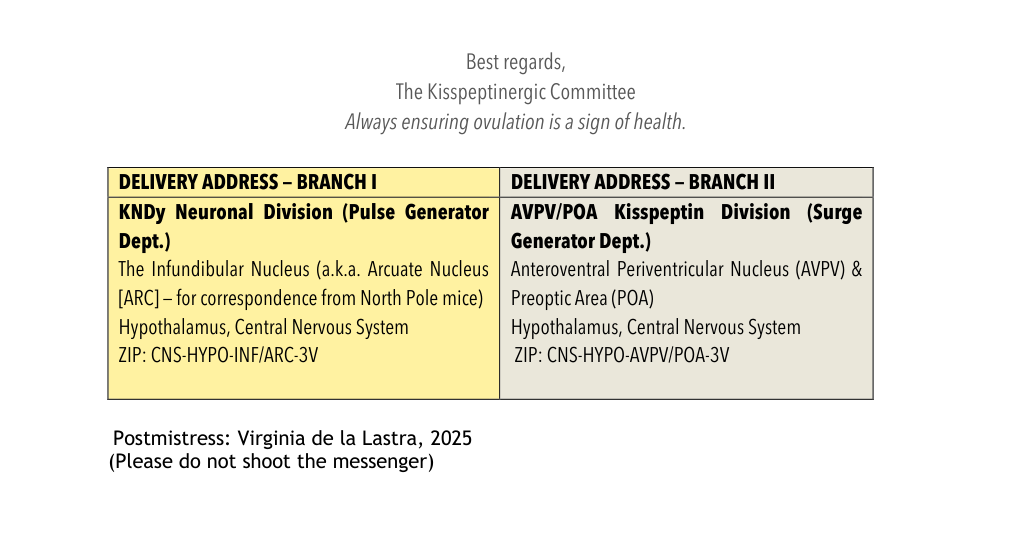
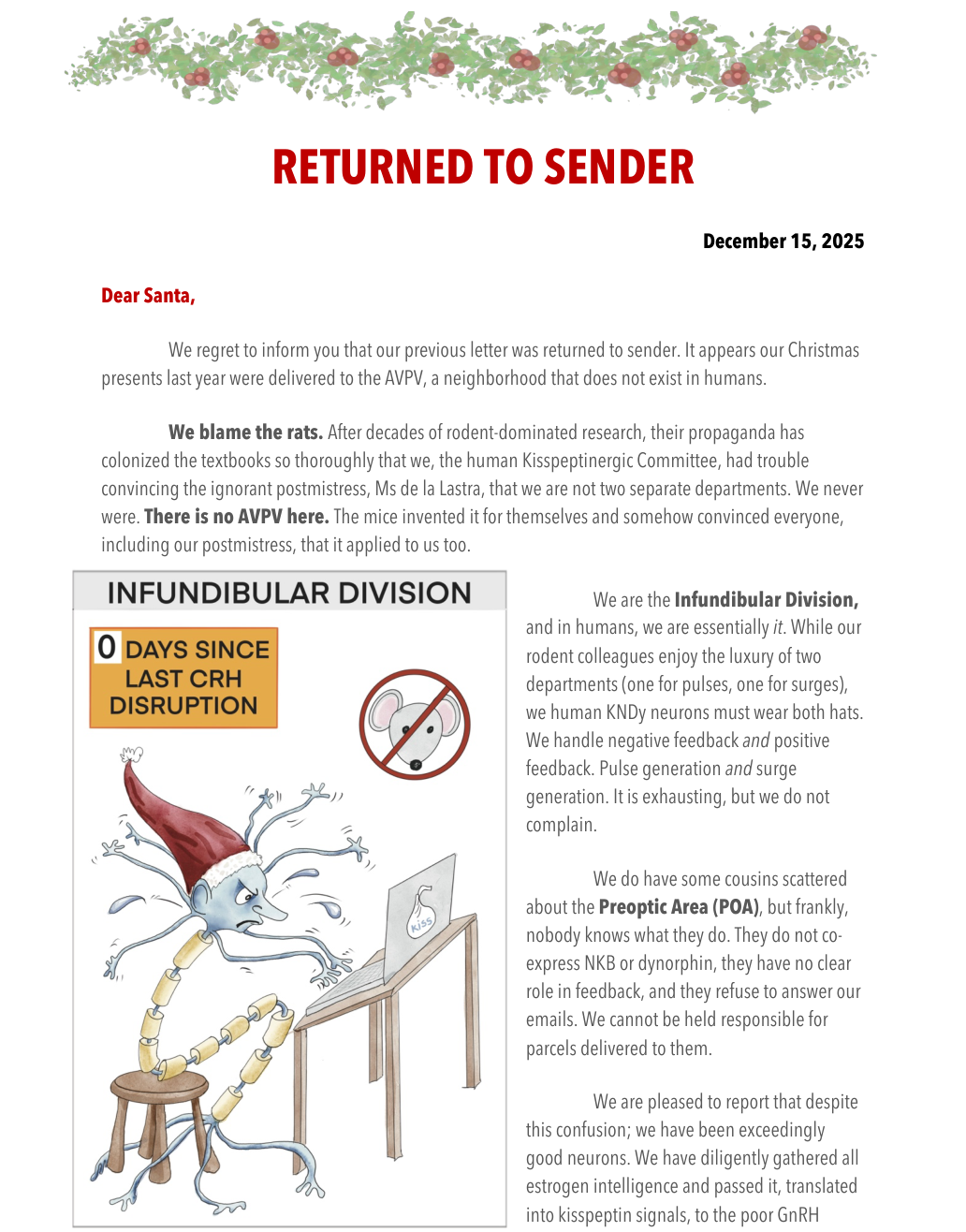
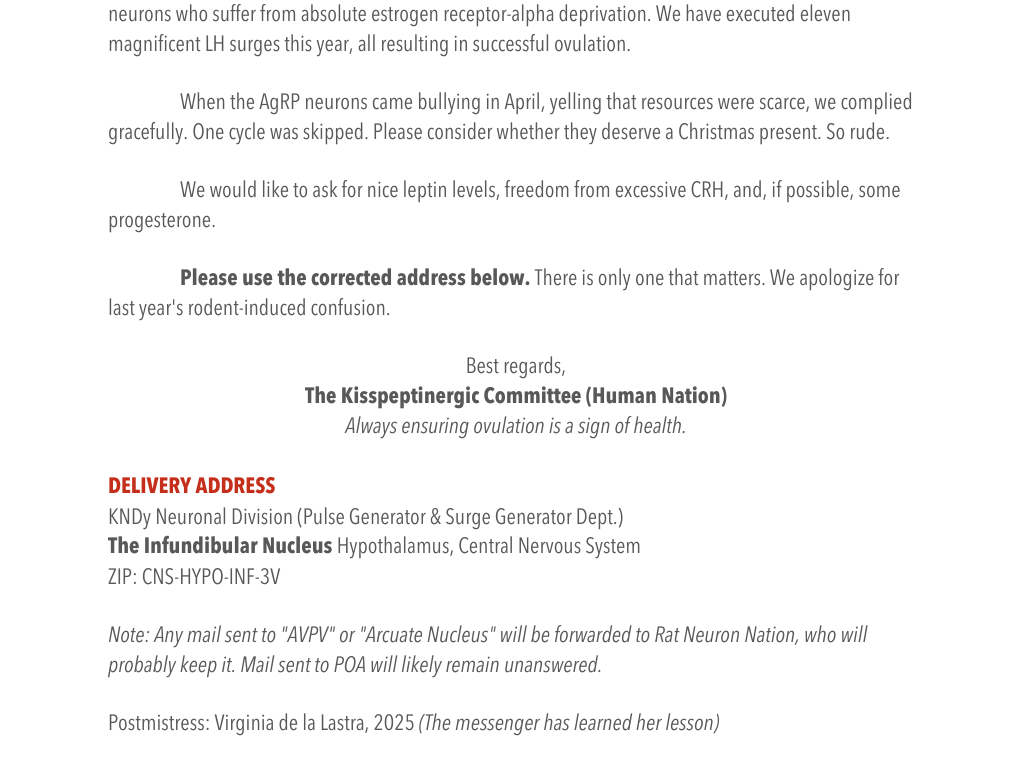
This illustrated Christmas Science blog presents a creative and educational look at key neuroendocrine concepts through a festive letter format.
By Virginia de la Lastra


By: Marshell M., Corkill M., Whitty M., Thomas A. & Turner J. Abstract Introduction: Women wishing to conceive are largely unaware of fertility symptoms at the time of ovulation. This study investigated the effectiveness of fertility-awareness in achieving pregnancy, particularly fertile mucus patterns, in the context of infertility. The 384 eligible participants were taken from consecutive women desiring pregnancy who attended 17 Australian Billings Ovulation Method VR clinics from 1999–2003. This cohort included couples with infertility in 12 months (51%)

FEMM Brings Fertility Awareness Classes to Global Audiences Over half a billion people in the world speak Spanish as their first language. Thanks to your support, FEMM is reaching more corners of the globe this fall with our new FEMM teacher certification in Spanish. Women from Chile, Costa Rica, Mexico, and the United States have already signed up for training. Leading the fertility awareness course is FEMM instructor Claudia Toribio Cruz. Claudia believes FEMM’s Spanish course fills a deep need.

By: Vigil P., Lyon C., Flores B., Rioseco H., and Serrano F.G. Abstract Introduction: The ovarian continuum is a process that occurs during a woman’s lifetime. It begins during intrauterine life with fertilization and ends with menopause. This process can be greatly affected by different conditions such as changes in hormonal levels and illnesses. Therefore, understanding and promoting the knowledge and use of biomarkers of ovulation in women is a key aspect to consider when evaluating their health status. The
Join our email list to read tips from women on managing fertility, the latest in hormonal science, and more.