A Diagnosis That Wasn’t the Whole Story
Leaving her latest appointment with a reproductive endocrinologist, Mara felt the same confusion and anger that she had felt for the last three years. How could we know so much about everything and still so little about a woman’s body? What was the problem? Why couldn’t anyone tell her what was wrong?
She and her husband had done everything they were told. They changed their diets. They took supplements. They lost weight. They had done rounds of bloodwork. Physical exams. Mara felt like she had never worked so hard for so little to have been achieved in her life. All of her most recent appointments had ended with the same conclusion: assisted reproductive technology was their best chance of having a child.
Throwing in the towel, Mara agreed to placate a friend and meet with a FEMM medical provider to get a second opinion. The FEMM provider listened to her and then offered the first glimmer of hope Mara had heard in a long time: “infertility is often a symptom; a manifestation of broader metabolic dysfunction. Insulin resistance, for example…” the FEMM provider went on… “Diet and exercise are important, but they’re not going to address the insulin resistance, which if it’s left untreated, contributes to infertility and miscarriage.” This second opinion was also the first time Mara had ever heard of “hyperprolactinemia.”
It was at least a lead, and a tiny, but maybe, possible, glimmer of hope. The FEMM provider reviewed her medical history, evaluated her cycle charting and ordered targeted laboratory testing, just as the other doctors had. But this time, Mara felt like they were looking for something – and that they knew what they were looking for.
The labs came back and the FEMM provider explained to Mara that her prolactin was in fact high and that there was also insulin resistance. Nothing happened overnight. But in a matter of months, by restoring her body’s normal ovulatory function—rather than working around it—Mara did conceive and carry a healthy pregnancy to term.
For thousands of women and men, Mara’s story reflects a very real and painfully emotional experience.
Treating the Root Cause, Not Just the Symptom
This is precisely where FEMM’s approach makes a profound difference.
Rather than accepting infertility as a diagnosis in itself, FEMM providers seek to uncover the physiological reasons a couple cannot conceive. Following the Reproductive Health Research Institute clinical guidelines, providers use a structured framework that includes detailed clinical history, physical examination, menstrual cycle charting with the assistance of certified FEMM teachers, targeted laboratory evaluation, ultrasound imaging where appropriate, and semen analysis for male patients.
The goal is simple but powerful: identify and treat the root cause first.
FEMM medical providers routinely diagnose and manage conditions that can impair fertility, including ovulatory dysfunction, insulin resistance, endometriosis, polycystic ovary syndrome (PCOS), abnormal uterine bleeding, thyroid disorders, hyperprolactinemia, and male-factor conditions such as varicocele. Through evidence-based medical treatment, lifestyle interventions, and targeted pharmacological therapies, many patients are able to restore normal reproductive function and achieve pregnancy naturally.
The Evidence — and a New Policy Opportunity
This approach is not theoretical.
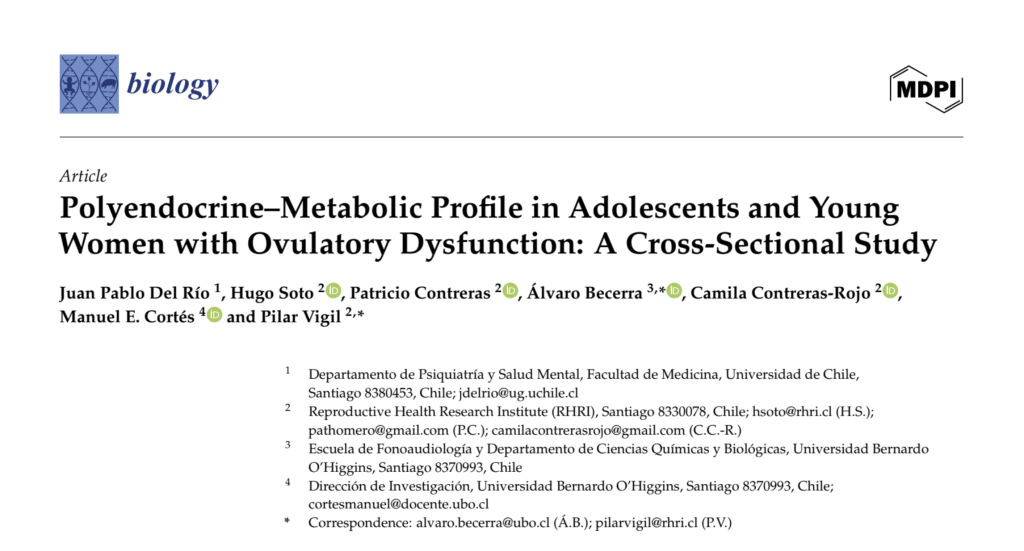
In March 2026, FEMM researchers presented new findings at the U.S. Department of Health and Human Services National Conference on Women’s Health demonstrating the importance of root-cause evaluation. Research involving 251 women revealed that ovulatory dysfunction was frequently associated with underlying endocrine disorders, including insulin resistance, hyperandrogenemia, thyroid dysfunction, and hyperprolactinemia.
Another study followed 120 women seeking pregnancy after receiving diagnosis and treatment for underlying medical conditions. Couples achieved pregnancy after targeted treatment across a range of diagnoses, including:
56% with ovulatory dysfunction
52% with infections
50% with endometriosis
49% with autoimmune disorders
47% with abnormal nutritional status
29% with male structural causes
26% with ovarian failure
25% with female structural causes
17% with oligoasthenoteratozoospermia
These findings reinforce an important principle: when the underlying disease is identified and treated, fertility can often be restored.
That is why a newly proposed federal rule in the United States represents such an important opportunity. The federal government is considering changes that would allow employers to offer fertility benefits as a category of limited excepted benefits under employer-sponsored health plans. Perhaps most importantly, the proposal explicitly recognizes that fertility care includes more than assisted reproductive procedures.
The proposed federal rule recognizes that this kind of comprehensive care deserves a place within employer-sponsored fertility benefits. This means that women like Mara can receive answers to years of painful dead ends and receive treatment for symptoms that were signs of an easily treatable condition. It means reducing the risk of repeated pregnancy loss by correcting the medical problems that made sustaining a pregnancy difficult in the first place.
And it means recognizing that reproductive health is inseparable from overall health.
Name changed; story reported by a FEMM patient.