By Karen Poehailos, MD, et al
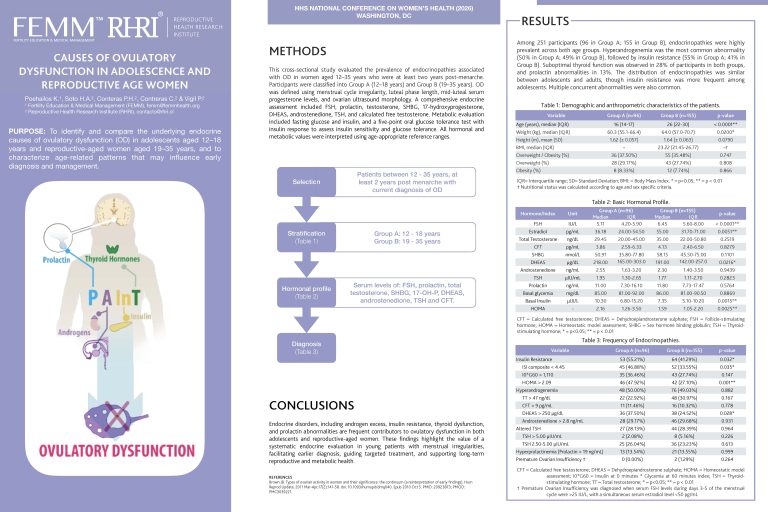
This poster was recently presented at the HHS National Conference on Women’s Health in Washington, DC, and looks at one of the most common but often misunderstood issues in women’s health: ovulatory dysfunction.
The study focuses on adolescents and women of reproductive age, aiming to better understand what’s actually driving these irregularities and how those causes may differ depending on age.
What we’re seeing
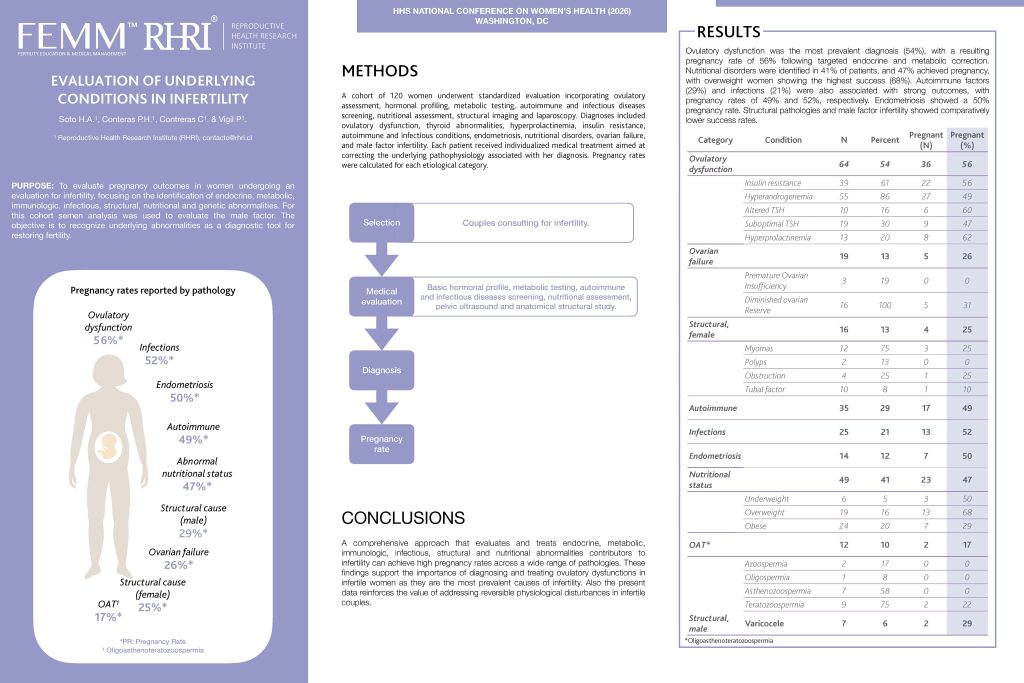
What stands out most is how common endocrine imbalances are among women with ovulatory dysfunction. Rather than a single cause, many patients present with overlapping conditions.
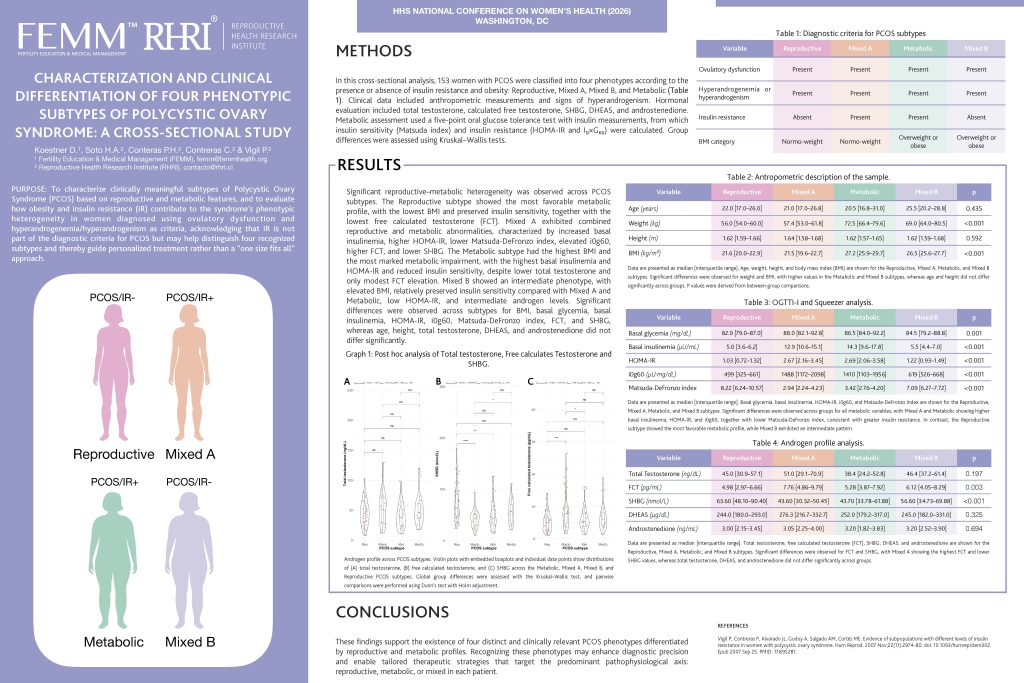
Some of the most frequent findings include insulin resistance, hyperandrogenism, thyroid dysfunction, and prolactin imbalances. In younger patients, insulin resistance appears to be particularly prominent.
Why this matters
These findings reinforce something we see clinically all the time: ovulatory dysfunction is rarely random. When we take the time to look deeper at underlying hormonal patterns, we’re able to diagnose earlier and treat more effectively.