By Hugo Soto, MD, et al
This study takes a broader look at infertility, focusing not just on outcomes, but on the underlying causes behind them.
By evaluating women undergoing infertility treatment, the research highlights how different physiological factors impact pregnancy rates.
What stands out
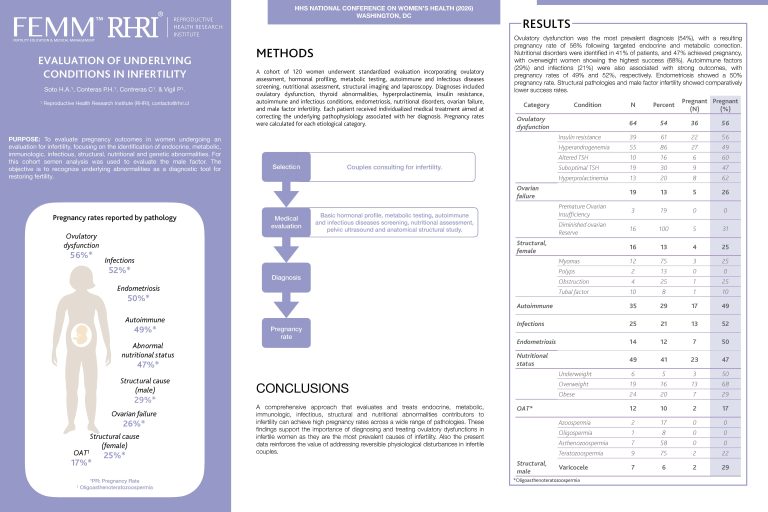
Ovulatory dysfunction remains the most common diagnosis, accounting for more than half of cases. However, what’s especially interesting is how outcomes vary depending on the underlying condition.
Pregnancy rates were relatively high in cases linked to ovulatory dysfunction, infections, and endometriosis. Nutritional factors also showed strong outcomes, particularly among overweight patients.
On the other hand, structural causes and male factor infertility were associated with lower success rates.
Why this matters
What this study reinforces is the importance of a comprehensive approach. When we identify and address the root cause — whether endocrine, metabolic, structural, or immunological — we can significantly improve outcomes for patients.