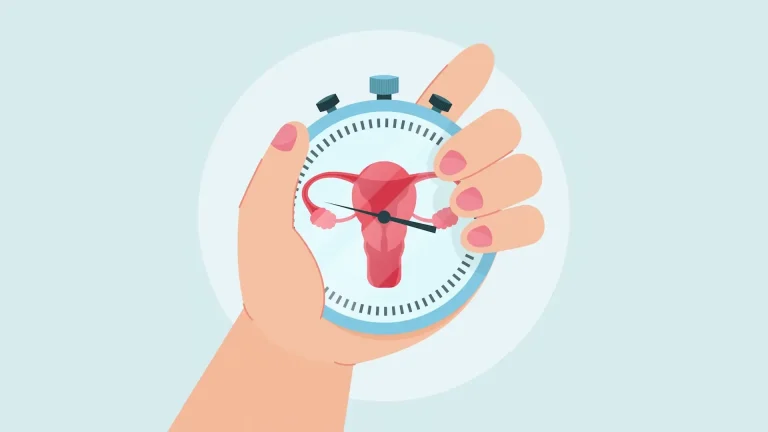
Most of us grew up hearing that painful periods and heavy bleeding were all just “part of being a woman.” But that does not have to be the case.
Much of what women have been conditioned to accept as normal is actually an indicator of an underlying health issue—one that can be fixed. Here are some things you should know….
A severely painful period is not normal
Are you downing Advil or wrapping yourself in a heating pad to stave off painful cramps during your period? Do cramps make it impossible for you to go to work or perform normal tasks in your day-to-day life? Do you feel nauseous because of the pain? This condition actually has a name: dysmenorrhea.
This is not normal and could be indicative of an underlying problem, such as endometriosis, fibroids, scarring, thyroid issues, or an infection. Studies have shown that it’s correlated to increased risk of pregnancy-related hypertensive disorders.
Bleeding is a normal part of your cycle. But…
Some types of bleeding can indicate health problems that need to be addressed:
- Period length of more than 7 days or less than 3 days
- Very heavy bleeding that requires you to change your pad or tampon every hour, or prevents you from doing normal activities (this is known as menorrhagia)
- Very light bleeding
- Bleeding that comes with significant pain
- No bleeding at all
- Continual bleeding throughout your entire cycle
Normal bleeding indicates that the lining of your uterus built up throughout the previous cycle under the influence of the hormones estrogen and progesterone. The quality of your bleeding reflects the hormonal levels of your previous cycle.
Irregular periods are a sign that something’s wrong
Maybe you go for a long time without a period. Maybe your cycle varies in length wildly. These are signs that your hormones are off.
An irregular cycle is associated with serious health problems such as coronary heart disease, diabetes, cancer, and depression. So, understanding and monitoring your cycle is important no matter whether you have specific reproductive goals or are just trying to stay healthy.
Menstrual bleeding doesn’t necessarily mean you’re ovulating.
Did you know you can have your period without ovulating?
Ovulation depends on a complex interplay of hormones. All of them have to work just right for ovulation.
Your brain sends the first signal (FSH), which selects a follicle inside the ovary. That follicle produces estrogen. When estrogen rises to a certain level the ovary signals the brain, and the brain triggers LH (luteinizing hormone). LH helps to mature the follicle and egg, and with the help of progesterone, causes the follicle to rupture. The egg is released (into the fallopian tubes). Menstrual bleeding does not necessarily indicate that all of this happened.
The most reliable sign that ovulation has happened is the presence of cervical fluid. Cervical fluid provides an accurate look at estrogen and progesterone levels. As your estrogen levels rise, the cervix, responding to estrogen stimulation, will begin to produce increasingly moist and thin cervical fluid. At the time of ovulation, the fluid becomes slippery. It’s this fluid that is the best indicator of whether you’re ovulating or not.
You deserve answers
You don’t have to white-knuckle your way through painful symptoms. Symptoms like painful or irregular periods or excessive bleeding are usually signals of a hormonal imbalance. With the proper health support, it is possible to get to the root cause of the imbalance and treat it.